Cash Out Explained: 9 Myths About Early Settlement, Corrected
By the UnliBets editorial team. Last reviewed: October 23, 2026.
Cash out is a button, and buttons feel like promises. An amount sits on the screen, changing with every possession or corner kick, and it is easy to read it as a gift, a refund or a verdict on your pick. That is how myths take hold. The number is real, but what it means is rarely explained at the moment it matters. Here are nine common beliefs about it, each followed by a correction and a worked example in ₱.
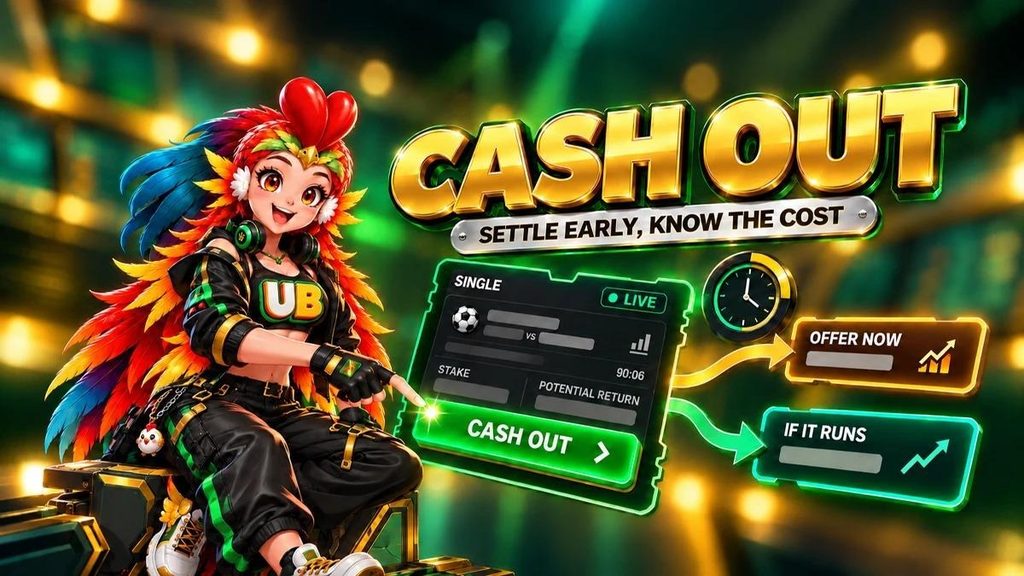
Cash out, where a sportsbook offers it, is a price for closing an open wager early. It is worked out from the wager’s live price with a margin usually taken off, so it tends to sit under the wager’s full value. Once you accept, the wager settles at that amount and the final result no longer affects you.
The running example is ₱100 on a pick at 1.85, which returns ₱185 if it wins (profit ₱85). Every price is an example. The 10% reduction used for offers is an assumed illustration, not a figure from any sportsbook, and real reductions vary and are not published. Cash out is described in general terms, as it works at many sportsbooks, and the platform’s own rules always come first.
Offers rest on decimal prices, so how decimal prices work is worth a quick read. UnliBets offers cash out on open tickets, so you can open UnliBets and look at the cash out option on an open ticket to see how a live price is shown.
Myth 1: Cashing Out Always Ends in a Profit
Myth: If an offer is on the screen, taking it banks a gain.
Reality: The amount can sit above or below your stake, depending on where the live price has gone.
Suppose the pick scores early and the live price shortens to 1.40. The value of your ticket at that price is ₱185 ÷ 1.40 = ₱132.14. After the assumed 10% reduction, the offer is ₱118.93, which is ₱18.93 above your stake.
Now run it the other way. The pick concedes and the live price drifts out to 2.05. The value becomes ₱185 ÷ 2.05 = ₱90.24, and the offer is ₱81.22, which is ₱18.78 below your stake. Same wager, two moments, two very different amounts.
| Situation | Live price | Value at live price | Offer (assumed 10% off) | Against ₱100 stake |
| The pick has scored | 1.40 | ₱132.14 | ₱118.93 | ₱18.93 above |
| Nothing has changed yet | 1.85 | ₱100 | ₱90 | ₱10 below |
| The pick has conceded | 2.05 | ₱90.24 | ₱81.22 | ₱18.78 below |
An offer below the stake is not a penalty and not an error. It is the sportsbook’s live valuation of a wager that has become less likely to win.
Myth 2: The Offer Equals What I Would Be Paid
Myth: The ₱185 figure is my money, and the offer is a slightly smaller version of it.
Reality: The ₱185 exists only if the pick wins. The offer is a price for the wager as it stands right now.
With the live price at 1.40, the offer is ₱118.93. The gap to ₱185 is ₱66.07. That gap is the price of certainty. You are being paid for a wager that has a good chance of finishing at ₱185, but also a real chance of finishing at nothing, and the offer has to sit somewhere between the two.
Notice what the offer is not doing. It is not splitting the difference between your stake and your payout, and it does not wait for the pick to be decided. If you decline and the pick wins, you receive ₱185. If you decline and it loses, you receive ₱0. The offer is only one of three possible results you are choosing between.
Myth 3: I Can Cash Out Right After Placing and Get My Stake Back
Myth: If nothing has happened yet, the offer must equal what I put in.
Reality: With the price unchanged at 1.85, the same working still takes a margin off.
The value at an unchanged price is ₱185 ÷ 1.85 = ₱100, exactly your stake. After the assumed 10% reduction, the offer is ₱90, which is ₱10 below the ₱100 you staked. In that example, placing and settling at once costs you ₱10 before a single thing has happened in the game.
Repeat the habit ten times and the cost is ₱100. A button that feels like an undo option is really a second transaction, and it carries its own price. Whether it ever appears immediately after placement depends on the platform.
Myth 4: The Cash Out Amount Is a Fee
Myth: The sportsbook takes a charge for letting me out early, and that charge is why the offer is lower.
Reality: The offer is a valuation built in layers. Part of the gap comes from the live prices themselves, and part may come from a further reduction.
Take a two-way market priced at 1.85 for your side and 2.05 for the other. The implied chances are 54.05% and 48.78%, which total 102.83%. The extra 2.83% is the margin already inside the live prices. Divide your side’s 54.05% by 102.83% and you get a margin-free chance of 52.56%. Applied to the ₱185 potential return, that chance is worth ₱97.24.
| Step | Working | Amount |
| Value at the live price | 185 ÷ 1.85 | ₱100 |
| Margin in the live prices removed | 185 × 52.56% | ₱97.24 |
| Offer after the assumed 10% reduction | ₱100 × 0.90 | ₱90 |
Reading down the table, the live-price value is ₱100, the margin-free figure is ₱97.24, and the offer is ₱90 after the assumed extra reduction. The size of any extra reduction depends on the sportsbook, the market and the moment, and sportsbooks do not publish it.
The first layer is the same margin that sits in every price. It is explained from scratch in what the vig is and how it works.
Myth 5: The Cash Out Button Is Always There
Myth: If I hold an open wager, I can settle it whenever I like.
Reality: Cash out is not offered on every wager at every moment, and the amount on screen can change before a request is processed.
Common reasons for a missing option are a market suspended after a major incident, a market type that is not eligible, an interruption in the live data feed, or an event that has been paused. Here is a typical basketball sequence, with no figures needed. With 2:40 left in the fourth quarter your team hits a three and an offer is visible. At 2:31 an official review pauses the market and the option disappears. At 2:05 the market reopens at new prices, and the offer returns at a recalculated amount or does not return at all.
If you tap accept while the price is moving, the request can fail or be re-quoted. The same pattern appears at the end of a volleyball set or in the break between boxing rounds, where prices tend to move sharply and markets are often paused until the picture clears. This describes market behavior in general, not any one platform.
Myth 6: Taking It Is Always the Smart Move, or Always the Weak One
Myth: There is a correct answer, and sensible people always cash out (or never do).
Reality: Both choices are valid, and neither one is safe. A simple test shows what each requires you to believe.
Divide the offer by the potential return. With the pick at 1.40, ₱118.93 ÷ ₱185 = 64.29%. That is the win chance you would need to believe for letting the wager run to match the offer. The live price itself implies 1 ÷ 1.40 = 71.43%, which already includes the sportsbook’s margin. The test is a comparison tool, not a recommendation.
Three questions keep the comparison honest. What would I need to believe, in my own words? Has anything changed since I placed the wager, such as an injury or a different scoreline, or is it only nerves? Would I place this same wager again at the current price? A yes or a no to the last one tells you something either way.
The kind of market behind the wager also changes how swings feel. Outcomes on a moneyline and on a spread can split apart late in a game, which moneyline vs point spread explains in detail.
Accepting gives up the larger possible return. Declining accepts the chance of losing the stake. Both are trade-offs, and which one suits you depends on how much variation you are comfortable with.
Myth 7: A Partial Cash Out Removes the Risk
Myth: Taking out half means the danger is gone.
Reality: A partial cash out settles part of the stake and leaves the rest running. It divides the uncertainty without removing it.
Take the ₱118.93 offer from Myth 1 and accept half of it. You receive ₱59.46 now, and ₱50 of the original stake stays open at 1.85, which returns ₱92.50 if the pick wins. The table sets this beside the two other choices.
| Path | If the pick wins | If the pick loses |
| Let the wager run | ₱185 | ₱0 |
| Full cash out at ₱118.93 | ₱118.93 | ₱118.93 |
| Partial cash out of half (₱59.46 now) | ₱151.96 (₱59.46 + ₱92.50) | ₱59.46 |
The partial result sits exactly halfway between the other two on both sides: ₱151.96 is the midpoint of ₱185 and ₱118.93, and ₱59.46 is the midpoint of ₱0 and ₱118.93. Against the ₱100 stake, the partial path ends ₱51.96 ahead or ₱40.54 behind. That is a different spread of outcomes, and neither end of it is certain.
Seeing how a live price moves makes these paths concrete. You can watch a market change on UnliBets, then look at the cash out option on an open ticket there.
Myth 8: A Parlay With Two Legs Won Is Practically Paid
Myth: Once two of three legs have come in, the ticket is nearly home.
Reality: One open leg decides the whole ticket, and it sets the price of any offer.
A parlay multiplies the prices of its legs, as laid out in how a parlay multiplies prices. Take ₱100 on three legs at 1.85, 2.05 and 1.85. The combined price is 7.0161, so the potential return is ₱701.61.
Legs one and two have won, and leg three is live at 1.30, which implies 76.92%. The value at that price is ₱701.61 ÷ 1.30 = ₱539.70, and the offer after the assumed 10% reduction is ₱485.73. To match that offer, leg three would need a 69.23% chance of winning (₱485.73 ÷ ₱701.61), against the 76.92% the live price implies.
| Leg 3 live price | Value at live price | Offer (assumed 10% off) |
| 1.30 | ₱539.70 | ₱485.73 |
| 2.50 | ₱280.65 | ₱252.58 |
If leg three drifts out to 2.50 instead, the offer drops to ₱252.58. The two won legs raise the starting figure but do not set the price. The open leg does, and it still has to win for the ₱701.61 to exist.
Myth 9: Cash Out Means Taking My Money Out of the Account
Myth: Cash out is the button for withdrawing a balance to an e-wallet or bank.
Reality: The same two words describe two unrelated things, and mixing them up causes real confusion.
Cash out on a wager settles one open ticket early at a price that moves with the event. Withdrawal moves money you already hold in your account to an e-wallet or bank, and it has nothing to do with a live game. Searches for cash out in the Philippines often return the second meaning. This article covers only the first. For questions about moving a balance, use the account help on the platform itself.
Staying in Control While the Offer Moves
If the urge to settle comes from nerves rather than from the price, step away from the live screen for a few minutes. A decision made while the score changes every minute is harder to judge than one made after a pause. Set stake sizes and limits before the game starts, using whatever limit tools your platform provides. Setting a stake limit before you bet shows how.
Cash out is only one way an open position can change value. Markets such as over/under totals and futures and outright markets also run while the price moves, and the same reading skills apply.
Cash Out FAQ
What does cash out mean in betting? It means settling an open wager early for an amount the sportsbook offers, instead of waiting for the final result. Where it is offered, the amount depends on the live price and the sportsbook’s margin.
How is a cash out offer calculated? The potential return is divided by the current decimal price, and the sportsbook then applies its margin and possibly a further reduction. With ₱185 and a live price of 1.40, the live-price value is ₱132.14, and an assumed 10% reduction gives ₱118.93.
Do I get my stake back when I cash out? You receive the offered amount as one total, stake included. An offer above the stake contains a profit, and an offer below it returns less than you put in.
Can a cashed-out bet be reopened? No. Once you accept, the wager is settled at that amount. If the pick then wins, nothing more is owed to you, and if it loses, nothing is taken back.
Why can’t I cash out my bet? The option may be paused after a major incident, unavailable for that market type, or interrupted by a data feed problem. A request can also fail if the price changes while it is being processed.
Is a cash out offer fixed once I see it? No. It refreshes as the live price moves, so the amount you tap and the amount processed can differ. Read the final figure on any confirmation screen before you accept.
See Cash Out on an Open Ticket
Open UnliBets and look at the cash out option on an open ticket
This article is for readers aged 18 and over. Bet only what you can afford to lose.
Sourcing note: Instantkabig.com myth-busting rewrite of the hakotpaldo.com cash out anchor, drafted from the October 2026 cash out brief. Same facts (offer built from the live price, margin in the live prices, an assumed further reduction, break-even test, partial and parlay paths, availability limits) with a different structure and an own number set built on 1.85 and 2.05 with a stake of ₱100. All figures were computed by script; the 10% reduction is an illustration and no percentage here is published by any sportsbook. The client confirmed on 2026-10-23 that UnliBets offers cash out; the mechanics of UnliBets’ own cash out are not documented, so the article describes cash out generically and every figure is an illustration. 3 CTA touchpoints included.