
What Is a Parlay Bet? Busting the Biggest Myths Beginners Believe
Myth: a parlay is just a bigger, better bet because the payout number looks so much larger than a single wager. Reality: that same big number is exactly why parlays are genuinely harder to win than any bet you'd place on its own. A parlay combines two or more picks, called legs, into one ticket, and every single leg has to win for it to pay out.
Most of the confusion around parlays traces back to six specific misunderstandings, each one built on a kernel of something that sounds reasonable on the surface. Working through them one at a time, with the actual math behind each one, is a faster way to genuinely understand parlays than reading a plain definition first and hoping the nuance sinks in on its own afterward.
Want to see real numbers while you read? Check today's lines on UnliBets.
Myth 1: "A Bigger Payout Means a Better Bet"
Say you combine two picks, each priced at 1.80 in decimal odds. Multiply them together ($1.80 \times 1.80 = 3.24$) and a ₱100 stake returns ₱324 total, or ₱224 in profit if both hit. That number looks a lot bigger than betting either pick on its own, where a ₱100 stake would return only ₱180.
The size of that number comes from multiplication, not from the bet being somehow smarter. If odds notation itself is unfamiliar, see how to read sports odds for the full breakdown.
A bigger payout reflects a lower chance of winning, not better value. The underlying math doesn't care how confident you personally feel about either pick, and it doesn't get any more forgiving just because the number on screen happens to look impressive.
Keep adding legs at that same 1.80 price and watch how fast the number grows against how fast the odds of actually collecting it shrink: three legs turns that ₱100 stake into ₱583. Four legs reaches ₱1,050. The payout is climbing in a straight multiplication, while your realistic chance of landing all four is dropping in the opposite direction, and dropping faster than the payout is rising.
You can browse today's matchups on UnliBets to see how this plays out on real games.
This is the exact trap the myth sets. Look only at the growing payout column and a parlay looks like it keeps getting better. Look at both columns side by side, and it's clearly a tradeoff, not a free upgrade.
Myth 2: "If One Leg Is a Lock, the Whole Parlay Is Safe"
No leg is ever fully safe, and a parlay treats every leg as equally necessary regardless of how confident you are about any single one. Win the "lock" and lose the other leg, and the parlay still pays nothing at all, the same outcome as losing both.
This is also where moneyline vs. point spread betting matters: whichever bet type makes up your legs, each one still has to individually win.
The word "lock" is doing a lot of work in this myth. Sportsbooks don't price any single game at 100% for a reason: upsets happen, favorites have off nights, and games occasionally get decided by a single bad bounce late in the fourth quarter. Treating any one leg as guaranteed, then building a parlay around that assumption, just means you've quietly accepted more risk than you think you have.
Myth 3: "Parlays and Straight Bets Carry the Same Risk, Just Bigger Rewards"
If each leg individually has a 50% chance of winning, two legs together only have a 25% chance of both hitting ($0.5 \times 0.5$). Add a third leg at that same probability and it drops to 12.5%. A fourth drops it to 6.25%. The risk compounds much faster than most beginners expect, well beyond what the bigger payout number suggests on its own.
New Jersey's Division of Gaming Enforcement data (as reported by Establish The Run) showed sportsbooks in that regulated US market held 19.9% on parlay bets in January 2024, compared to roughly 4-5% on standard straight bets, nearly five times the house edge. That gap is the practical result of the same math.
Given that higher edge, disciplined bankroll management matters more with parlays than with straight bets, not less.
"Same risk, bigger reward" would only be true if the odds of winning stayed flat while the payout grew. They don't. Every leg added multiplies the payout and divides the win probability at the same time, in opposite directions, which is the entire reason parlays carry a structurally higher house edge than straight bets rather than just a scaled-up version of the exact same risk profile.
Myth 4: "Combining a Team's Win With Their Star Player's Stats Is Free Extra Value"
This one feels intuitive: if you're confident a team wins, surely their best player having a big game is a safe add-on to the same ticket. But those two outcomes aren't independent. A player scoring above a certain total makes the team more likely to win, and the team winning big makes that player more likely to have padded their own stats late. That overlap is called correlation.
Multiplying the odds of two correlated outcomes the way a standard parlay does would overstate the real combined probability, since ordinary parlay math assumes each leg is independent of the others. Sportsbooks catch this. They either block the combination outright or price it through a dedicated same-game parlay product built specifically to account for the overlap, usually less generously than naive multiplication would suggest. There's no free value hiding in a correlated combo. The book already adjusted for it.
The same logic applies outside basketball or football too. A boxer to win by knockout and that same fight to end before a certain round are correlated in exactly the same way: a knockout makes an early finish more likely, so combining them isn't treated as two independent legs even though it might look like one on the bet slip. Whatever the sport, the test is the same: does one outcome make the other more likely? If yes, expect the sportsbook to have already priced that overlap in.
Myth 5: "A Canceled Game Voids the Whole Ticket"
Not quite. If a game in your parlay gets postponed or canceled before it's played, sportsbooks generally void just that leg rather than the entire ticket, then reprice the remaining legs using their own odds. A 3-leg parlay that loses one leg to a cancellation becomes a 2-leg parlay at 2-leg odds, smaller than the original number but very much still alive.
If the game is only delayed and still gets played within the sportsbook's own rescheduling window, commonly somewhere between 24 and 72 hours depending on the platform, the original leg typically still stands as placed. That exact window isn't standardized across the industry, so it's worth checking a specific sportsbook's own rules rather than assuming, especially before assuming a delayed game automatically works in your favor.
This matters more on a parlay than on a single straight bet, because a voided leg changes the payout on every remaining leg, not just the one that got canceled. Knowing this in advance means a postponement doesn't come as a surprise mid-ticket, and it also explains why the final payout on a settled parlay can sometimes look smaller than the number originally shown when it was placed.
Myth 6: "You Need to Bet Big for a Parlay to Be Worth It"
The multiplication works the same regardless of stake size. A ₱50 parlay and a ₱5,000 parlay at identical odds produce identical percentage returns, just scaled differently. Believing a parlay is only "worth it" at a larger stake is really the big-number appeal talking, not the math. If anything, keeping the stake small is the more defensible approach, precisely because the win probability is lower than a straight bet to begin with.
This myth tends to show up alongside Myth 1: once a bettor decides bigger stakes make parlays "count" more, the natural next step is stacking more legs onto the same ticket to chase an even bigger number, compounding both problems in the same bet.
If a parlay feels more meaningful at a larger stake, that's a signal worth paying attention to, just not the signal it appears to be on the surface. It usually means the excitement of the potential number has taken over from the actual reasoning behind each individual leg, which is exactly the pattern this whole myth list is trying to catch before it costs something real.
Why These Myths Persist
Every one of these myths survives because the payout number is the first thing you see on a bet slip, and it's a genuinely exciting number. The mechanics that produce it, compounding probability, correlation, void handling, all sit one layer beneath that number, invisible unless you go looking for them. It's easy to anchor on the exciting part and skip the part that explains why it's exciting.
Sportsbooks aren't hiding this information. It just isn't the headline. The headline is always the payout, because that's the part designed to grab attention, not the win probability sitting quietly underneath it.
There's also a social element to it. A hit parlay makes for a good story, a screenshot worth sharing, a specific number people remember and repeat. A missed parlay is just as common but rarely gets talked about the same way, which quietly skews how often people think parlays actually come through in practice.
How to Build a Parlay Without Falling for These Myths
Start with legs you'd genuinely place as straight bets on their own, not picks chosen because they fit a story about a big number. Add them to your bet slip one at a time, the way you would for any single bet, and let the sportsbook combine them into a parlay automatically once there are two or more selections sitting there.
Before confirming, check the combined odds against what you expected, and count your legs. It's easy to add one extra pick by accident on a busy slate, and removing a leg after confirming usually means rebuilding the ticket from scratch on most platforms. That final check takes a few seconds and catches most avoidable mistakes before they lock in.
Keep the leg count low, two or three at most until the mechanics feel intuitive, and treat the eventual payout as a byproduct of good individual picks rather than a number you built the picks around. That single habit undoes almost every myth covered above at once.
It also helps to keep a simple log of every parlay you place: the legs, the odds, the stake, and the final result. Judged over 20 or 30 tickets instead of one exciting night, the real pattern becomes obvious in a way no single result, win or lose, could ever show on its own.
Pair that log with real bankroll management, sizing each parlay as a small, consistent unit of your total bankroll, and the tracking actually means something instead of one oversized ticket swinging the whole picture by itself.
What a Parlay Actually Is
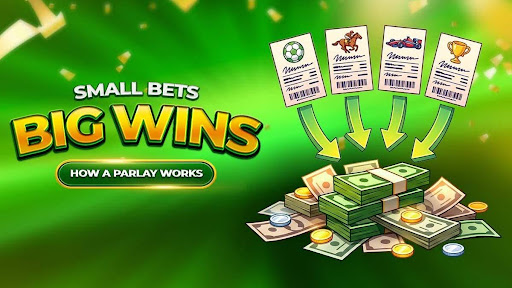
Strip away the myths and a parlay is simply this: two or more individual bets combined into one ticket, where every leg must win for any payout at all.
- Same-game parlay (SGP): Multiple bets from one matchup instead of spreading legs across different games. Priced carefully by the sportsbook because of the correlation issue covered in Myth 4 above.
- Teaser: Shifts the number in your favor on every leg, in exchange for a smaller payout than a standard parlay.
- Round robin: Splits your picks into every possible smaller combination, multiple 2-leg parlays instead of one bigger all-or-nothing ticket, trading some payout ceiling for less all-or-nothing risk.
- Parlay card: A fixed-format card, sometimes used for pooled contests, where the games and numbers are already printed and you just pick winners against them.
Some sportsbooks also offer an expanded same-game parlay product, sometimes labeled SGP+ or similar, that lets you combine legs from a same-game parlay with legs from a completely different game on one ticket. It's the same underlying multiplication as a standard parlay, just with more flexibility in what gets mixed together.
None of these variations change the core rule debunked across every myth above. More legs always means a bigger potential number and a correspondingly smaller chance of ever actually collecting it.
Common Threads Behind These Myths
Every myth here traces back to the same misreading: treating the size of the potential payout as information about the quality of the bet. It isn't. The payout size is just what multiplication produces when you stack win requirements on top of each other. A bigger number means more things have to go right, not that you found a smarter angle.
The practical fix isn't avoiding parlays altogether. It's building them from picks you'd genuinely make on their own, keeping the leg count low, and treating the final number as a byproduct of good picks rather than the goal you're building backward from.
Six myths, one root cause: mistaking the size of a number for information about the quality of the bet behind it. Once that distinction is genuinely clear, everything else covered in this guide follows from it directly, without needing to memorize each myth separately.
Every Myth, Side by Side
| Myth | Reality |
|---|---|
| Bigger payout means a better bet | Bigger payout means a lower chance of winning |
| A "lock" leg makes the parlay safe | Every leg is equally required, confidence doesn't change that |
| Same risk as a straight bet, just bigger reward | Risk compounds downward while payout compounds upward |
| Correlated combos are free extra value | Sportsbooks already price out the overlap |
| A canceled game voids the whole ticket | Only that leg is voided; the rest reprices |
| Bigger stakes make a parlay "count" more | The percentage math is identical at any stake size |
FAQ
Is a parlay a good strategy for winning money?
Not in the sense of improving your odds. It trades a higher chance of a smaller win for a lower chance of a larger one, which is a different goal than maximizing win probability.
What happens if one leg of a parlay pushes?
Most sportsbooks remove the pushed leg entirely and recalculate your payout using the odds of your remaining legs, rather than voiding the whole ticket.
Why do sportsbooks allow parlays if they're hard to win?
Because the house edge on parlays is significantly higher than on straight bets, which is exactly what the New Jersey data above shows.
Can I cash out a parlay before it finishes?
Some sportsbooks offer a cash-out option that lets you settle a parlay early, usually at a reduced payout compared to letting it play out in full. Availability depends on the platform and how many legs have already been decided.
Should a beginner avoid parlays entirely?
Not necessarily, but starting with 2 legs at most, until the mechanics and the risk both feel intuitive, is a more defensible starting point than chasing a big number on a first attempt.
How many legs can a parlay have?
Sportsbooks generally allow anywhere from 2 up to a much higher cap, sometimes a dozen or more. Every added leg lowers your probability of winning, so keeping parlays short is generally the more disciplined approach.
Can I edit a parlay after placing it?
No. Once confirmed, the legs are locked in. Wanting a different combination means letting the current ticket play out and building a new one for the next selections.
Do these myths apply the same way to same-game parlays?
Yes, and the correlation myth in particular applies even more directly, since same-game parlays are built almost entirely from outcomes within one single match that can influence each other directly.